


OTHERS…
Javier Báez is signed for four more seasons in Detroit. Is there any hope?
“Right now I feel like nothing is working for me,” Báez said. “Absolutely nothing. Nothing hitting, nothing fielding, nothing baserunning. It’s just the way I’m playing, and I know I’m not the guy that you guys see out there.”
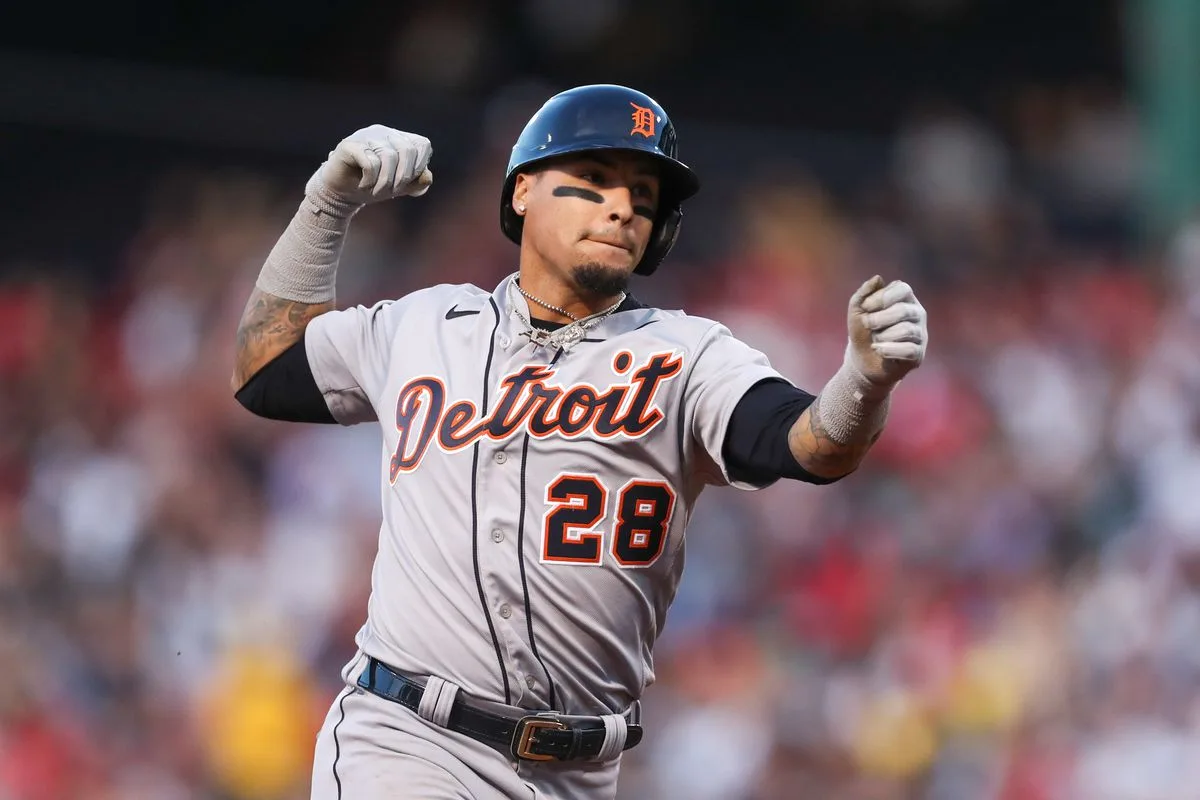
It was a rare glimpse into Báez’s internal monologue. He has played poorly and been booed by his own fans. He has failed to conjure the same magic that made him beloved and embraced in Chicago. Troublesome as Báez has been for the Tigers and their fan base, this hasn’t exactly been easy on the player himself.
And as the 2023 season neared its end, Báez seemed as desperate as anyone for something — anything — to change.
“I think it’s more mental than anything, to be honest,” Báez said. “I know the numbers are not there. The confidence at the plate is not there. Every time I go to focus on my approach, I maybe have it for one pitch and then it goes away. I don’t know what’s really happening.
It’s not about the strikeouts. I’m still going to chase balls out of the zone and stuff. I’m still gonna hit ’em, too. But I don’t know if it’s timing or I’m just not recognizing the pitch. Just trying to do too much, but I go out there and try every day and try again. Nothing’s working.”
When Báez signed a six-year, $140 million deal in what was supposed to be the biggest signing of the Tigers’ rise from the ashes of a brutal rebuild, the deal included an opt-out after the second season. The clause loomed as a way for Báez to get paid deeper into his 30s in the event he built on the strong second half he had with the Mets in 2021. But when the opt-out deadline came and went last week, there was little decision to be made. Báez was worth 0.8 fWAR this past season. He had a 88 wRC+ in 2022 and 61 in 2023. Báez did not exercise the opt-out.
The Tigers are now on the hook to pay Báez $98 million over the next four seasons. The deal has joined a short list of the worst contracts in baseball, a fitting heir to the Tigers’ forlorn extension with Miguel Cabrera.
Now that we know without any doubt Báez is going to remain in Detroit, a new question presents itself: Is there any hope this gets better?
“It’s hard when players struggle,” Tigers manager A.J. Hinch said. “Me as a manager or coach, we’re not mad at him. That’s the biggest emotional difference between being on the inside and being on the outside. We’re encouragers by nature. We’re trying to find solutions for him, but it’s hard. … He says he can’t see the ball and is not seeing the ball well. That’s not something that is necessarily a quick fix.”
The morning after the last game, Scott Harris sat on a stool with a microphone in hand and said what Tigers’ leadership has told us about Báez for the past two years.
“I’ve said this to you guys before and I say it because I mean it: the work is good,” said Harris, the team’s president of baseball operations. “The work is good behind the scenes. You guys don’t always get to see it, but he’s working really hard behind the scenes.”
That has been the line. That despite Báez’s frustrating play, despite the repeated bad throws and swinging strikeouts, the player himself is not disengaged.
People around the Tigers indeed say Báez puts in more work than many may perceive. Much of it happens down in the cages, away from public view. At the same time, never do you hear anyone touting Báez as the model of work ethic.
