


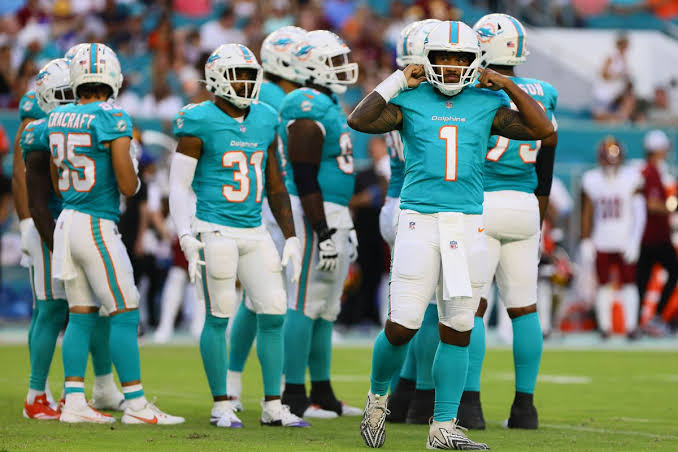
The captain of the Miami Dolphins has delivered a bombshell announcement, declaring, “I can’t play for the Miami Dolphins anymore.” This unexpected statement has taken fans, teammates, and the broader NFL community by surprise, as he steps down from the leadership role he has held with dedication. While he didn’t elaborate on his reasons, his words carry the weight of a decision likely shaped by a variety of personal, professional, and perhaps even philosophical factors.
The choice to leave a team, especially as a captain, is rarely straightforward. Captains play a unique role within a team, embodying its values, leading by example, and serving as a bridge between coaches and players. For a captain to walk away, it suggests that something significant is at play, as this leadership position is usually occupied by players with deep loyalty to the team and its mission. There’s a sense that this departure is not just about a simple career move—it likely indicates a clash of values, an unresolved personal struggle, or a rift between player and organization that could not be reconciled.
One possible factor might be a lack of alignment with the team’s vision or direction. In professional sports, organizations are constantly evolving, with changes in coaching staff, strategies, and even ownership dynamics. While these shifts can be healthy, they sometimes create friction for long-time players and leaders. A captain, deeply invested in the culture and trajectory of the team, may feel disconnected if the organization starts to move in a direction that no longer aligns with their values or playing philosophy. Without a clear connection to the team’s vision, even a passionate leader may decide it’s time to step away.
Another possibility could involve team dynamics. As the captain, he is often looked up to by younger players, serves as a confidant to his peers, and plays a pivotal role in maintaining team morale. But sometimes, internal issues—such as unresolved conflicts or concerns about how players are being treated—can weigh heavily on a leader’s mind. If the captain feels that the team’s environment is no longer positive or productive, he might choose to walk away rather than continue in a role that no longer brings him fulfillment or pride.
In addition, the decision could be rooted in personal reasons that go beyond the team itself. Playing in the NFL, particularly in a high-profile role, comes with immense pressure and sacrifice. For captains, who carry the additional weight of leadership, this responsibility can take a toll on both mental and physical health. In recent years, many athletes have taken steps to prioritize their well-being, making choices that support a healthier, more balanced lifestyle. It’s possible that the Dolphins’ captain has reached a point where stepping down feels necessary to prioritize his own well-being and perhaps reconnect with his life outside of football.
In conclusion, the Miami Dolphins’ captain’s decision to leave the team carries a mixture of mystery and gravity. While fans may be left speculating about the specifics, his choice highlights the complexities athletes face when balancing personal values, team loyalty, and the demands of their careers. For now, all that’s clear is that his time with the Dolphins has come to an end, marking a new chapter for both the player and the team he has led so honorably.
