


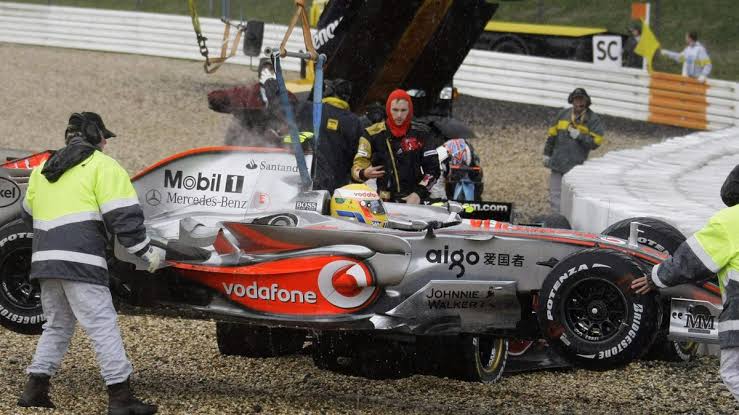
Lewis Hamilton, one of the most successful drivers in Formula 1 history, experienced a significant accident during the 2020 British Grand Prix at Silverstone. The race, which was already thrilling, took a dramatic turn in the final laps when Hamilton, driving for Mercedes, suffered a front-left tire failure while leading the race.
As he navigated the high-speed Copse corner, the tire burst, causing Hamilton to lose control of the car. He veered off the track, narrowly avoiding a barrier before managing to bring the car back onto the circuit. Despite the severe damage and the intense challenge of handling a car with compromised control, Hamilton remarkably managed to cross the finish line, securing first place by a mere 6.7 seconds over his nearest competitor, Max Verstappen.
The incident highlighted Hamilton’s exceptional skill and composure under pressure. His ability to maintain control and continue racing despite the accident demonstrated his racing prowess. Post-race, Hamilton expressed gratitude for his team and the car’s performance, emphasizing the importance of remaining calm and focused during such high-stress moments.
This incident not only underscored the inherent dangers of motorsport but also sparked discussions about tire safety and performance in F1. Pirelli, the tire supplier, faced scrutiny regarding the durability of their products, especially given the high speeds and demands of modern racing.
Ultimately, Hamilton’s accident at Silverstone became a pivotal moment in the 2020 season, further solidifying his reputation as a tenacious competitor. It served as a reminder of the fine line between triumph and disaster in the high-octane world of Formula 1 racing, as well as the critical role of technology and strategy in ensuring driver safety.
