


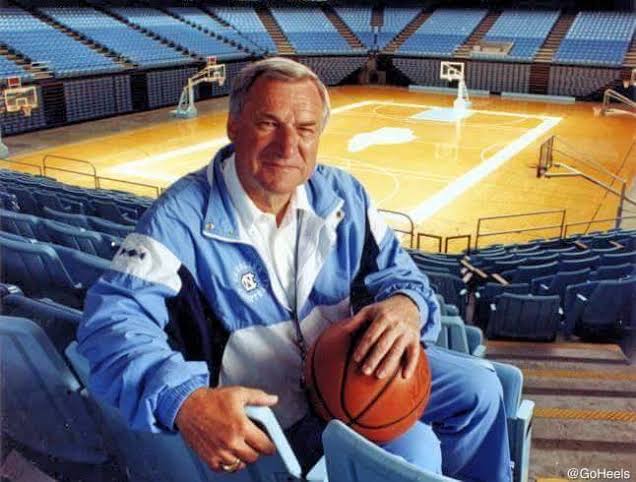
Dean Smith’s UNC Legacy: The Architect of Carolina Basketball
Dean Smith’s name is synonymous with excellence, integrity, and innovation in college basketball. As the legendary head coach of the University of North Carolina (UNC) Tar Heels from 1961 to 1997, Smith transformed not only the basketball program but also the university and the sport itself. His enduring legacy is built on a foundation of remarkable achievements, groundbreaking strategies, and a profound influence on generations of players, coaches, and fans.
**Early Life and Coaching Beginnings**
Born in Emporia, Kansas, in 1931, Dean Smith developed a passion for basketball early in life. After playing at the University of Kansas, he began his coaching career at North Carolina in 1961, initially serving as an assistant before taking over as head coach in 1961. From that point forward, Smith’s vision and leadership would elevate UNC to national prominence.
**Building a Dynasty**
Dean Smith’s tenure at UNC spanned 36 years, during which he amassed 879 wins, making him one of the winningest coaches in college basketball history at the time. His teams were known for their fast-paced, disciplined style of play, emphasizing teamwork, unselfishness, and smart defense. Under Smith, the Tar Heels became a perennial powerhouse, capturing two NCAA championships in 1982 and 1993, and reaching the Final Four numerous times.
**Innovative Strategies and the Four Corners Offense**
One of Smith’s most notable contributions to basketball strategy was the innovative use of the “Four Corners” offense. Implemented in the 1970s to stall opponents and control the game tempo, the offense was a precursor to the modern slowdown tactics. It also showcased Smith’s basketball IQ and his commitment to winning while adhering to the rules, as the strategy eventually led to a rule change banning the offense, highlighting its significance in the sport’s evolution.
**Player Development and Leadership**
Smith’s impact extended beyond X’s and O’s. He was a master recruiter and mentor, cultivating a roster filled with future NBA stars such as Michael Jordan, James Worthy, and Sam Perkins. His emphasis on character, discipline, and academic achievement helped shape well-rounded individuals. Many of his former players speak of Smith’s mentorship, which prioritized integrity, humility, and social responsibility.
**A Champion for Social Justice**
Beyond basketball, Dean Smith was a committed advocate for social justice. During a time of significant racial tension, Smith took a courageous stand by recruiting and supporting African American athletes, including Charlie Scott, the first African American scholarship athlete at UNC. His leadership extended off the court as he promoted equality and inclusivity, often using his platform to advocate for civil rights. Smith’s actions reflected his deep moral conviction and set a standard for athlete-coach relationships and university policies.
**The “Carolina Way” and Character Building**
The ethos of the “Carolina Way” — emphasizing humility, teamwork, and integrity — was central to Smith’s philosophy. He believed that basketball was a vehicle to teach life lessons, and his teams exemplified sportsmanship and respect for opponents. His leadership fostered a family-like environment that valued loyalty and humility, which resonated far beyond the court.
**Legacy and Honors**
Dean Smith’s legacy is decorated with accolades and honors. He was a two-time NCAA Coach of the Year, a member of the Naismith Memorial Basketball Hall of Fame, and received the Presidential Medal of Freedom in 2013 for his contributions to society. His influence is evident in the coaching philosophies of many modern coaches, including Roy Williams, who played under Smith and succeeded him at UNC.
**Impact on the University of North Carolina**
Smith’s influence on UNC extended beyond basketball. His leadership helped elevate the university’s national profile and fostered a culture of excellence and integrity. His commitment to community service and student-athlete development left an indelible mark on the institution.
**Enduring Legacy**
Even after retiring in 1997, Dean Smith’s legacy endures. The university named the Dean E. Smith Center in his honor, a testament to his lasting impact. His life and career embody the ideals of perseverance, character, and service, inspiring countless individuals both within and outside the sport.
**Conclusion**
Dean Smith’s legacy as the architect of Carolina basketball is unparalleled. He revolutionized the game with innovative strategies, nurtured generations of talented and principled players, and championed social justice and character development. His influence transcends wins and championships, shaping the moral and cultural fabric of college basketball. As the architect of Carolina basketball, Dean Smith’s contributions continue to inspire and serve as a benchmark for excellence, integrity, and leadership in sports and life.
