


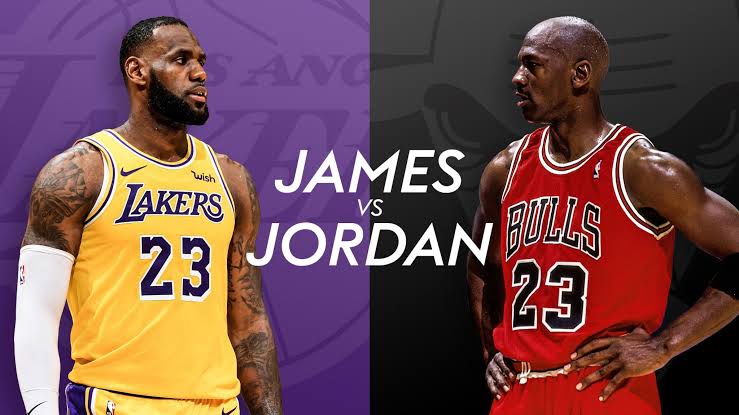
While the debate between LeBron James and Michael Jordan will continue, a more objective analysis, stripped of emotional attachment…
In the realm of sports, few debates are as persistent and as passionate as the question of whether LeBron James is superior to Michael Jordan. This argument often gets tangled in a complex web of emotions, nostalgia, and personal biases, especially when fans who grew up watching Jordan clash with those witnessing LeBron’s career in real time. However, when stripped of the emotional aspects, focusing strictly on objective measures and facts, a strong case can be made that LeBron James has surpassed Michael Jordan as the greatest basketball player of all time. In this exploration, we will examine various aspects, including individual achievements, longevity, versatility, competition, and overall impact on the game, that support the case for LeBron James.
Individual Achievements
When comparing individual achievements, both LeBron James and Michael Jordan have a plethora of accolades, but they differ in several meaningful ways. Jordan’s career is often highlighted by his six NBA championships, five MVP awards, and ten scoring titles. These accomplishments are impressive, but they must be evaluated in context.
LeBron James, meanwhile, has four NBA championships, four MVP awards, and has been named to an astonishing 19 All-NBA teams as of 2024. Where LeBron’s case shines is in his versatility and overall contributions to the game beyond just scoring. While Jordan was known primarily for his scoring, LeBron excels in scoring, rebounding, and playmaking. He currently ranks in the top five in both total points and assists in NBA history, making him a more well-rounded player in terms of statistical contributions. His ability to impact the game in multiple ways arguably makes him a more valuable individual player than Jordan, whose primary contributions were on offense.
LeBron also has a higher career Player Efficiency Rating (PER) than Jordan, standing at 27.47 compared to Jordan’s 27.91, reflecting their dominance in different eras. However, LeBron’s longevity and consistency over 21 seasons in the NBA significantly extend his dominance. Jordan, on the other hand, retired twice during his career, which limited his total output and possibly prevented him from achieving even more.
Longevity and Consistency
LeBron James’ longevity is another crucial factor in the debate. Entering the NBA straight out of high school in 2003, LeBron has played 21 seasons (and counting), maintaining an unprecedented level of elite performance throughout. His ability to stay healthy and continue performing at a high level into his late 30s is unprecedented. Michael Jordan, in contrast, played 15 seasons, with two retirements that broke up his career and significantly limited his longevity.
Jordan’s dominance was more concentrated, as he won six championships in an eight-year span during his time with the Chicago Bulls. However, his absences from the game—first to pursue a baseball career and later due to retirement—leave questions about how long he could have sustained his excellence had he continued playing without interruption. LeBron’s extended peak and consistent dominance over two decades set him apart in terms of career longevity. For example, in his 19th season, LeBron averaged over 30 points per game, a feat that is unheard of for players of his age.
Versatility
Another aspect where LeBron James separates himself from Jordan is his versatility. LeBron has shown the ability to excel in multiple roles and positions throughout his career. He has played as a point guard, small forward, and even power forward, making him one of the most positionally versatile players in NBA history. His unique combination of size, strength, and basketball IQ allows him to impact the game in ways Jordan could not. While Jordan was an elite defender and scorer, LeBron’s ability to act as both the primary playmaker and the lead scorer for his teams gives him an added layer of versatility.
This versatility is further highlighted by the fact that LeBron has had success on multiple teams and in different systems. He has won championships with three different franchises (Miami Heat, Cleveland Cavaliers, and Los Angeles Lakers), whereas Jordan’s six titles all came with the same team (Chicago Bulls) under the same head coach (Phil Jackson). LeBron’s ability to adapt and excel in various environments underscores his all-around greatness and capacity to succeed in diverse situations.
Level of Competition
When discussing competition, it’s essential to recognize the differences in the eras that both players competed in. Michael Jordan’s era was undoubtedly tough, but the modern NBA, where LeBron James has played, is arguably more competitive and features a deeper pool of talent. The internationalization of the game, the improvement in training techniques, and the advancement in sports science have all contributed to an overall higher level of competition.
LeBron has faced some of the greatest teams in NBA history, most notably the Golden State Warriors, who set an NBA record with 73 wins in the regular season. Despite this, LeBron’s Cleveland Cavaliers became the first team in NBA history to come back from a 3-1 deficit in the Finals to defeat the Warriors in 2016. This feat is a testament to LeBron’s mental toughness and ability to rise to the occasion against historically great competition.
In contrast, Jordan’s Bulls never faced a team as dominant as the Warriors during their Finals runs. While Jordan’s individual greatness is undisputed, the level of competition LeBron has faced in the Finals, including multiple Hall of Fame-caliber players, adds weight to the argument in his favor.
Impact on the Game
Michael Jordan is often credited with revolutionizing the NBA and turning it into a global phenomenon. His impact on the sport is undeniable, as he helped popularize basketball worldwide and became a cultural icon. However, LeBron James has also had a massive influence, particularly in the player empowerment era. LeBron’s decisions to switch teams and form “superteams” have fundamentally altered how players approach free agency and team-building.
LeBron’s impact also extends off the court, where he has become a powerful voice on social issues, using his platform to advocate for change in ways Jordan never did during his career. His off-court endeavors, including the LeBron James Family Foundation, have contributed to his status as a global ambassador for the game, much like Jordan was in the 1990s.
Conclusion
While the debate between LeBron James and Michael Jordan will continue, a more objective analysis, stripped of emotional attachment, supports the argument that LeBron James has surpassed Michael Jordan. LeBron’s longevity, versatility, success across multiple franchises, and ability to excel in different roles provide a more complete picture of a player whose overall impact on the game may ultimately outweigh Jordan’s. Both players are legendary, but in terms of career achievements, adaptability, and sustained excellence, LeBron James makes a compelling case as the greatest basketball player of all time.
